
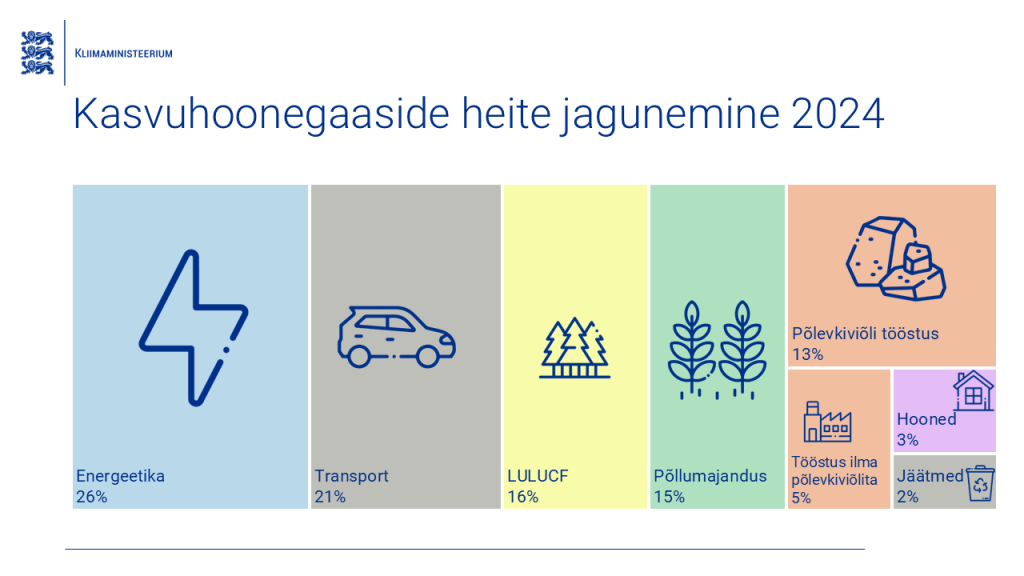
According to the latest greenhouse gas inventory published by the Ministry of Climate and the Estonian Environmental Research Centre, Estonia’s greenhouse gas emissions in 2024 amounted to 12 million tonnes of CO₂ equivalent. Emissions decreased by 9% compared to 2023 and by 66.5% compared to 1990.
The main reduction occurred in the energy sector, where emissions declined by 16% over the year. In 2024, electricity generation from fossil fuels decreased from 2,302 GWh to 1,963 GWh, while renewable energy production increased from 2,607 GWh to 3,398 GWh.
“Greenhouse gas emissions reflect broader societal changes. In 2024, Estonia’s electricity production underwent a significant shift towards cleaner solutions. Electricity generation based on fossil fuels decreased by nearly 19% over the year, while renewable energy production grew by approximately 23%. At the same time, the average electricity market price fell by 4% compared to the previous year. This trend clearly indicates that the role of renewable energy in the market is increasing, contributing to lower electricity prices. We must continue to develop and implement efficient solutions across all sectors that benefit our people, economy, and environment alike,” said Kristi Klaas, Deputy Secretary General of the Ministry of Climate.
In the transport sector, emissions increased by 1% year-on-year, accounting for 21% of total national emissions. The majority of transport emissions originate from road transport, which represents nearly 95% of the sector’s emissions. Passenger cars remain the most significant component, with emissions remaining at a similar level, while mileage by heavy-duty vehicles increased by 22%. The use of liquid biofuels also rose by 23% in 2024.
The LULUCF sector (land use, land-use change, and forestry) accounts for 16% of total greenhouse gas emissions. The sector’s net emissions decreased by 0.6 million tonnes of CO₂ equivalent, or 23.5%, primarily due to reduced logging volumes. Emissions in the LULUCF sector are assessed based on changes in carbon stocks. In 2024, carbon stocks increased in forest land, harvested wood products, and, to a lesser extent, grasslands. The highest net emissions were recorded in wetlands—mainly due to peat extraction and use in horticulture—and in croplands.
Agriculture accounted for 15% of greenhouse gas emissions, with emissions increasing by 2% compared to the previous year, representing a very small change in absolute terms. The main sources of emissions are enteric fermentation in livestock, manure management, and grazing. Emissions increased due to the use of organic fertilizers, crop residues, and, to a lesser extent, stationary equipment.
The shale oil industry accounted for 13% of greenhouse gas emissions, while other manufacturing industries contributed less than 5% of total emissions. Emissions from shale oil production decreased by 7.5% year-on-year. This decline was mainly related to the operation of the Enefit-140 shale oil plant, where lower-calorific-value oil shale was used, and where equipment reliability and maintenance activities affected production volumes.
The Estonian Environmental Research Centre, in cooperation with the Environment Agency, continuously improves the greenhouse gas inventory methodology each year to ensure more accurate and country-specific data. All methodological changes are applied retrospectively by recalculating the entire time series to ensure comparability and reliability of data across years.

