
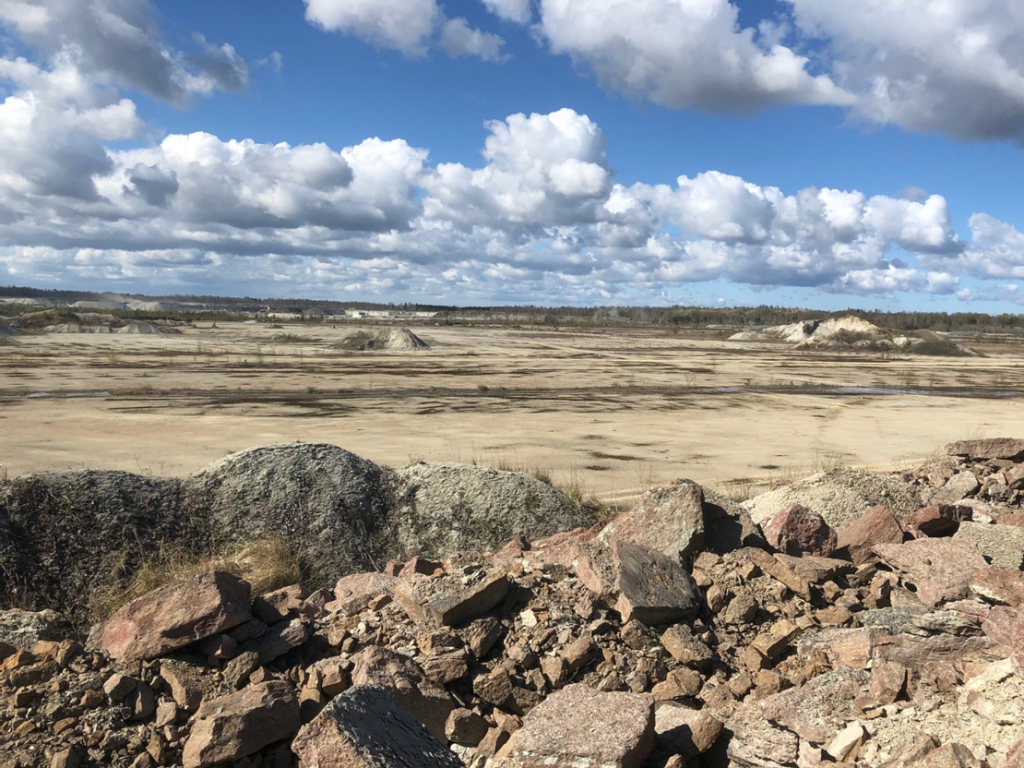
The study, conducted between 2023 and 2026, focused on the Aru-Lõuna area near Kunda, where an active limestone quarry is currently operating. The findings show that while Estonian phosphorite can be industrially processed using existing technologies and used to produce high-quality fertilizers and chemical industry feedstocks, mining and processing are not economically viable under current market conditions.
“The study provides us with science-based knowledge about the properties of Estonian phosphorite and its potential uses. Based on current knowledge, phosphorite mining in the studied area is not economically justified. At the same time, it is important to understand that Estonia’s phosphorite constitutes a strategic mineral reserve whose significance may change in the future due to technological advances or evolving geopolitical circumstances,” said Jaanus Uiga, Deputy Secretary General for Energy and Mineral Resources at the Ministry of Climate.
The study conducted by EGT focused on the potential of the Toolse phosphorite deposit in the Aru-Lõuna area. It assessed, among other things, the geochemical and mining-related properties of the phosphorite, potential processing technologies, economic feasibility, environmental impacts, and life-cycle aspects. In total, the applicability of two technological approaches and eight possible development scenarios were analysed.
The results indicate that Estonian phosphorite stands out internationally for its very low content of harmful impurities, such as cadmium. This makes it suitable for producing high-quality phosphorus-based raw materials and products.
However, phosphorite mining and processing in the Aru-Lõuna area are currently not economically viable. The main reasons are the substantial investment requirements, as well as processing and waste management costs arising from the characteristics of the mineral resource. In addition, phosphoric acid prices on the global market are not currently high enough to justify such an investment.
“The study found that, using currently available industrial technologies, it is not economically feasible to extract rare earth elements from Aru-Lõuna phosphorite. Furthermore, there is currently no suitable industrial-scale solution for valorising the black shale overlying the phosphorite deposit,” explained Sirli Sipp Kulli, Director of the Geological Survey of Estonia.
For this reason, phosphorite should primarily be regarded as a strategic mineral reserve for Estonia. Its utilisation may become viable in the future if technologies advance, market conditions change, or disruptions occur in existing raw material supply chains.
At the European Union level, developing phosphorite processing capacity continues to be considered important for strengthening Europe’s security of supply and economic resilience. In Estonia, further potential is seen primarily in exploring opportunities to utilise associated resources and production residues, as well as in developing new clean industrial solutions.
According to Sirli Sipp Kulli, the Geological Survey of Estonia’s Scientific Council will discuss the study on Friday. The Geological Survey of Estonia will publish the study’s final consolidated report on its website on 29 June.

